
Ruqyah Rundown
What follows is a brief rundown of what I know can constitute protection from afflictions of the unseen, which I’ve gleaned from authentic sources and speakers over the years. At the end, I’ve shared my resources and encourage everyone reading to explore them to get a better, more holistic understanding of the subject matter. Don’t take my word alone, take from where I took.
Of course, this is by no means a comprehensive list, as the subject is vast and we cannot do it justice in one (or even a few) articles. However, it is a good starting point if you’re interested in the topic or suffering, in sha’ Allah.
Rectifying Your Deen
This is the most important one, and the one that people are most quick to dismiss, unfortunately. It doesn’t matter how much recitation you’re doing, how much extra prayers you’re praying, etc. if you don’t even understand what Tawheed is (all 3 categories). If your aqeedah isn’t correct, you’re leaving yourself wide open for Shaiytaan. What we know and believe about Allah is essential.
To that end, here’s a great place to start that learning journey, in sha’ Allah.
Tied in with this is the critical component of praying all your fardh prayers. This cannot be stressed enough. If you are someone who is not praying all your five daily prayers, on time, in the appropriate way, fulfilling all the necessary conditions—then you need to stop reading immediately and make that the focus of your life. Nothing you ever do will be more important than that.
The ultimate goal of Shaiytaan is to lead the believers into kufr.
‘Abdullah bin Buraidah narrated that his father said: “The Messenger of Allah (ﷺ) said: ‘The covenant that distinguishes between us and them is prayer; so whoever leaves it, he has committed Kufr.'”
So the matter is serious.
Ruqyah
Contrary to popular belief, ruqyah (loosely translated to Qur’anic healing) is not just for afflictions of the unseen, such as evil eye, magic and jinns. However, for these issues, we have no other alternatives for cure.
Importantly, there is no ruqyah superior to what comes to us from the Qur’an and the authentic Sunnah. This is a point that Shaykh Muhammad Tim Humble stresses a lot, as well. So let your ruqyah start with, at the very least:
- al-Fatiha
- al-Falaq
- an-Nas
- al-Baqara (for magic)
NOTE: Differentiating between and diagnosing which of the unseen ailments you’re suffering from is largely irrelevant, especially early on. The treatment will remain the same basically across the board.
Who Should Perform Ruqyah?
The BEST ruqyah is the one you perform upon yourself. You DO NOT need an “expert” or an “imam” or a “white magician” (pro tip: there’s no such thing; all magic is haram). There are more hucksters and charlatans in this field than maybe any other, and they’re only interested in separating you from your money, or leading you to kufr.
“Ruqyah Videos”
Listening to Qur’an frequently is great to attach your heart to it and make memorization easier. Contemplating on the Qur’an and listening to it often is a form of worship that garners us rewards, even, alhamdulillah. However, the majority of scholars are of the view that listening to Qur’an, whether on tape or via YouTube videos and the like, it does not constitute as ruqyah!
Ruqyah is what is recited on the tongue.
Separately, there is all manner of filth and actual sihr buried in most of these so-called “ruqyah videos” which are freely available online. I was shown one in which, when the speed was slowed you could hear, on a background track, a woman doing sihr on a man to be destroyed.
Even if this weren’t the case, as we’ve already established, since ruqyah is simply Qur’anic recitation, what need is there for specialized playlists? There is no need.
Adhkar
Although the word “adhkar” itself is simply the plural of “dhikr” (translation: rememberance), it is generally used to refer to the morning and evening rememberances. These are the armor of the Muslim against the Shaiyateen. There are also adhkar to recite after the fardh prayers, which I’ve also included.
An easy way to memorize these is to save images of each du’a or dhikr on your phone in an album. This makes them easy to access when you need to go through them and you’ll soon have them memorized, in sha’ Allah.
I’ve shared some images and their use-cases below, but you can find additional adhkar from a book like Hisnul Muslim, or Hisnul Mu’min and the like. Always make sure the adhkar is accompanied by proofs and evidences of their authenticity. You’ll find people recommending all kinds of crazy things but we must restrict ourselves to only that which comes to us from the Qur’an and authentic Sunnah. And that’s more than enough, alhamdulillah.
It may look daunting but it really isn’t because many of these you may know already, such as the short surahs, Ayatul Kursi, etc.
Morning
after Fajr time starts
- Pray for Jannah and protection from the Hellfire x3
- Sayyid ul-Istighfar
- Recite Ayat ul-Kursi
- Recite Surah al-Ikhlas x3
- Recite Surah al-Falaq x3
- Recite Surah an-Nas x3
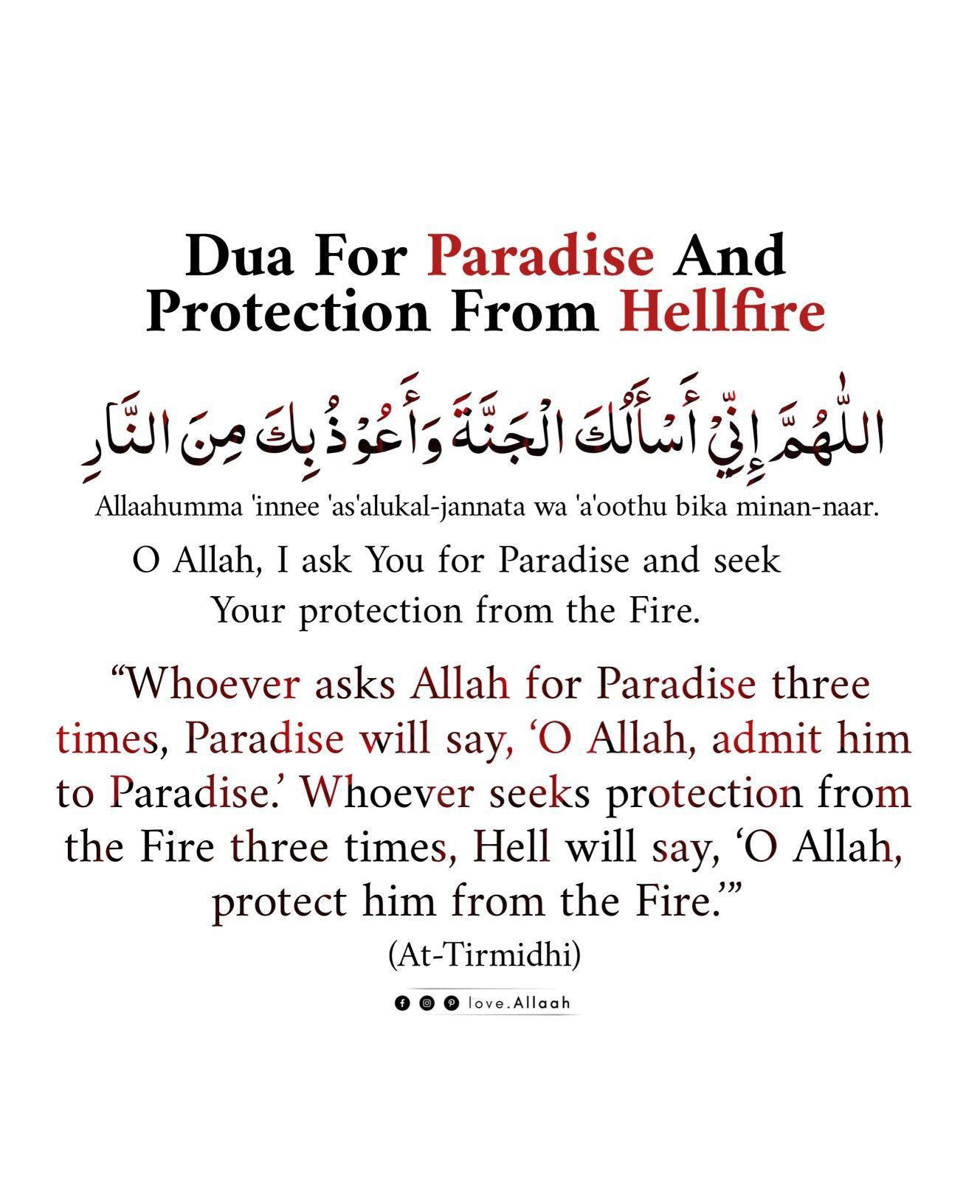
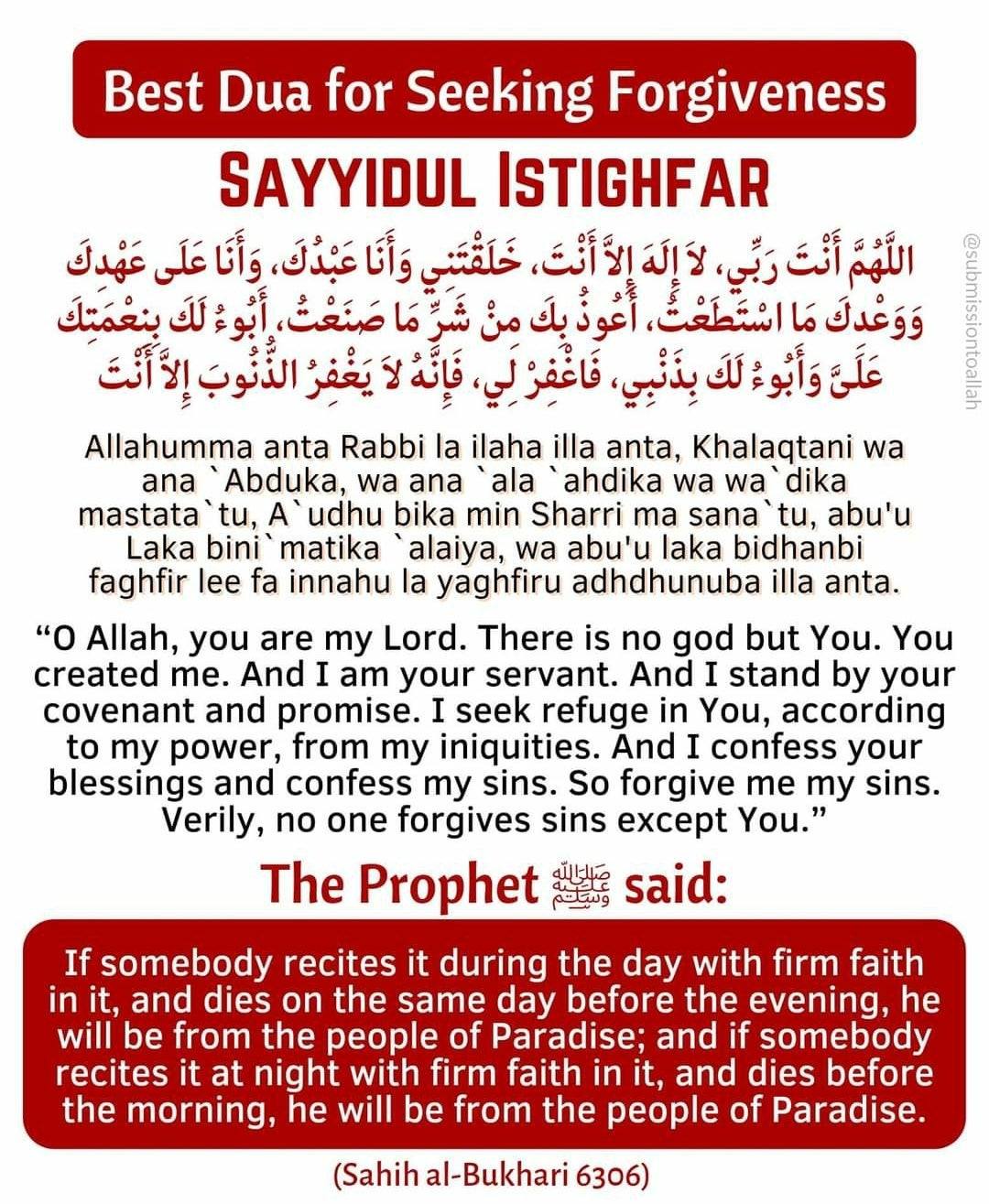
Evening
after sunset
- Sayyid ul-Istighfar
- Recite Ayat ul-Kursi
- Recite Surah al-Ikhlas x3
- Recite Surah al-Falaq x3
- Recite Surah an-Nas x3
After Salah
immediately after the tasleem of every fardh prayer only
- Say “Astaghfirullah” x3
- Praise Allah
- Recite Ayat ul-Kursi
- Recite Surah al-Ikhlas, Surah al-Falaq, and Surah an-Nas
- Glorify Allah x3 (after Fajr)
- Recite “Subhanallah, Alhamdulillah, Allahu akbar” 33x (you can also do each just 10 times)

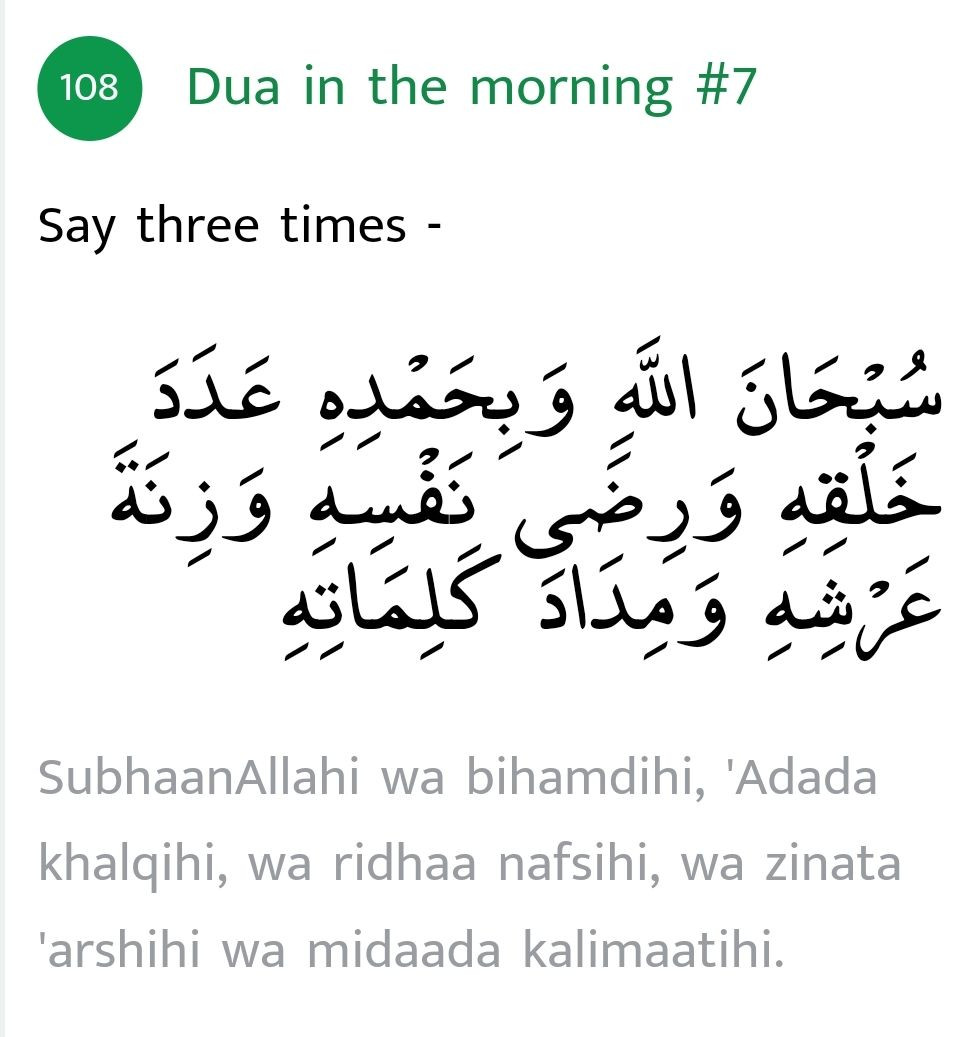
These ones I’ve listed can be found in the books I mentioned earlier, and they’ll include the citations (as I think in some of the images, I cropped them out to reduce distraction while memorizing).
Situational
Learn the du’as for specific situations, in particular the du’a before entering the bathroom, as bathrooms and other such filthy places are where the Shaiyateen can often be found, and a person is vulnerable therein because you cannot make dhikr and your awrah is exposed.
Learn the du’a for leaving your house, because the home is a place of safety and outside is fitnah.
Try to avoid being out at sunset, if you can, as that’s when the Shaiyateen are typically out. It’s not haram to be out and about, but it’s preferred not to be, especially for small children, who may be more vulnerable.
When you close a door (to a room, house, etc.), say, “Bismillah” as the Shaiyateen cannot open a door that has been shut with “Bismillah.” Even better if it has a lock, but if it doesn’t, no worries inshallah.
You should also say “Bismillah” upon entering your house, as well as give salaams, even if no one else is home.
Precautions
There are many things we do, which we may not realize are basically unraveling all the work we did with the above. These are serious issues. Does any one of us put on fresh, clean clothes and then go out to roll around in mud and filth? Of course not! But that is essentially what we’re doing when we pray, do our adhkar, recite and perform ruqyah upon ourselves, but then turn around and engage in things like:
Music
The scholars have called music the adhan of Shaiytaan! Listening to music is essentially inviting the Shaiyateen into your home and heart. Ibn al-Qayyim wrote a whole book on The Evils of Music.
It’s interesting to realize (after you learn about tawheed and its opposite, shirk) just how much shirk and kufr is in music. Not just modern music. Not just a specific genre. All of it. There are so many lyrics and songs that we feel are “clean” because they don’t contain lyrics pertaining to sex, drugs, or alcohol. For those who wish to follow their desires, this often makes people feel it’s ok to listen to such music. Rather, they may contain that which is far worse: shirk and kufr.
Music is not permissible, full stop, not even instrumentals. And this is from the well-known and established position of the religion.
Another warning from our illustrious scholars: music and the Qur’an cannot exist within the same heart; one must necessarily push the other out. Which one do we prefer to die with?
Social Media
Delete delete delete. What benefit has there ever been from this cancer? For women, especially, either you’ll take an axe to your own self esteem from seeing beautiful women (all filtered and made-up), or you’ll be enticed to do the same and post yourself up. Not only is this tabarruj (wanton and impermissible display of one’s beauty), but you are inviting the envy, jealousy and rancor of strangers you don’t even know, on a global scale. There is no upside.
If it’s not your own visage, then it’s the things you own, the car you drive, the house you live in, the great marriage you’ve been blessed with, etc. Not even remotely worth getting evil eye over.
Do your psychological and spiritual health a favor and get off of social media, especially visually-based ones like Instagram, TikTok, etc.
Related to this is that you should be extremely careful of who you share details of your life with, especially the good things that you’re blessed with. Unfortunately, even family members can give the evil eye, so be very, very cautious in this respect.
Resources for Additional Learning
These are the resources I’ve used in my journey to learning more about Ruqyah. Basically all of what’s listed above has it’s roots and citations in some of the works below.
- Diaries of an Exorcist
- Ruqyah Course – EXTREMELY beneficial, can’t recommend enough
- Simple Guide to Self-Ruqyah
- 10-Lecture Ruqyah Course
- Marriage & Ruqyah
- Ruqyah Workshop Level 1, 2, 3